
2025 Keynote Speakers

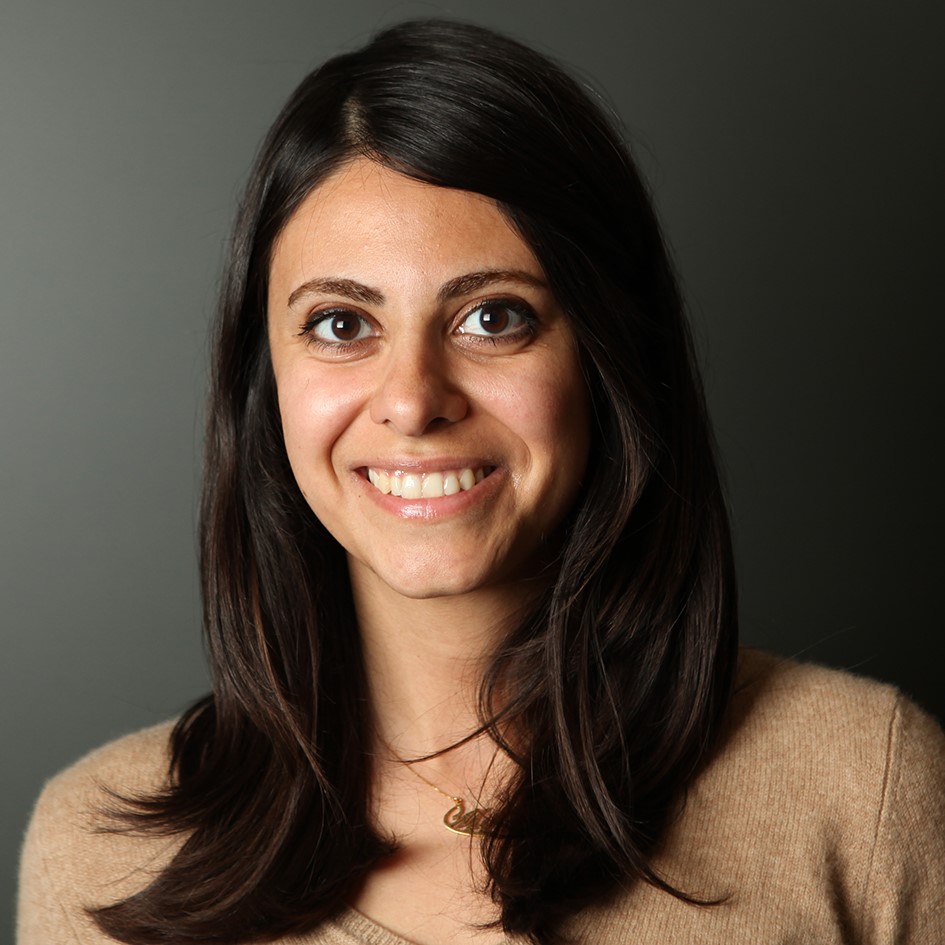

Associate Professor, Electrical & Computer Engineering, University of California, Santa Barbara
Assistant Professor, Institute of Neuroinformatics, University of Zurich and ETH Zurich
Professor, Department of Electrical Engineering, City University of Hong Kong
Prof. Kerem Camsari
Biography: Kerem Y. Camsari is an Associate Professor of Electrical and Computer Engineering at UC Santa Barbara. He received his Ph.D. from Purdue University in 2015 and continued there as a postdoctoral researcher until 2020. His research spans quantum transport and probabilistic computing, where he helped introduce p-bits and p-circuits as a practical bridge between classical and quantum hardware. His work has been published in Nature, Nature Electronics, Science Advances, and Physical Review X, and he has delivered over 50 invited talks at venues including APS, DRC, MMM, IEDM, and VLSID. He has served on program committees for DATE, ICRC, and IEDM, and currently leads the unconventional computing section of the IEEE Nanotechnology Council’s technical committee. Kerem’s honors include the Bell Labs Prize, Misha Mahowald Prize, IEEE Magnetics Society Early Career Award, ONR YIP, and NSF CAREER. He was an IEEE Distinguished Lecturer in 2024 and is a senior member of IEEE.
Title: Probabilistic Computing with p-bits: Optimization, Machine Learning and Quantum Simulation
Abstract: Positioned at the intersection of classical and quantum computing, probabilistic computing provides a physics-inspired approach to domain-specific computation by harnessing the inherent randomness of devices such as stochastic magnetic tunnel junctions (sMTJs) . These devices naturally generate tunable randomness and replace thousands of transistors per p-bit, reducing energy consumption. In this talk, we demonstrate how networks of probabilistic bits (p-bits) in both digital CMOS and hybrid CMOS + sMTJ implementations can accelerate tasks in optimization, machine learning, and statistical inference through asynchronous updates and sparse connectivity. We also describe a distributed FPGA-based prototype that achieves near-linear speedup with minimal overhead, enabling the study of large-scale problems. In particular, we will highlight recent results on 3D Spin Glass systems benchmarked against quantum annealers, showing how targeted architectures can drastically reduce time and energy to solution. The unique combination of intrinsic randomness in sMTJs and flexible CMOS circuits may pave the way for next-generation probabilistic computers that can address computationally intensive, previously intractable tasks in a wide range of applications.
Prof. Melika Payvand
Biography: Melika Payvand is an Assistant Professor at the Institute of Neuroinformatics, University of Zurich and ETH Zurich and leads the Emerging Intelligent Substrates lab. She received her PhD in Electrical and Computer Engineering at the University of California Santa Barbara. Her research interest is in developing intelligent learning systems on physical substrates, inspired by the hierarchical structure-function correlate in the biological brain. She is the recipient of the 2023 prestigious Swiss National Science Foundation Starting Grant. She has co-coordinated the European project NEUROTECH (neurotechai.eu), served as the co-chair of the International Conference on Neuromorphic Systems (ICONS) and has co-organized the scientific program of the Capocaccia Neuromorphic Intelligence workshop. She is the chair elect of the Neural Systems and Application Technical Committee of the IEEE Circuits and Systems Society and is in the technical program committee of the European Solid State Circuits.
Title: Emergence and Inductive Biases: Bidirectional Lessons Between Brains and Neuromorphic Systems
Abstract: In the Emerging Intelligent Substrates Lab, we explore how the structural principles of neural substrates across scales give rise to efficient computation, and how these insights can systematically inform the design of neuromorphic systems. In this talk, I will focus on three interconnected themes. First, I will discuss brain-inspired inductive biases: how embedding morphological and architectural priors such as dendritic processing, small-world connectivity, and temporal coding into our models and circuits improves power, area, generalization, and task performance. By understanding when and why these features offer advantages, we aim to establish a principled approach to neuromorphic co-design. Second, I will highlight how emerging memory technologies and advanced 3D integration provide unique substrates to physically realize these inductive biases. Their ability to tightly integrate memory and computation, support local connectivity, and reduce wiring and energy costs makes them especially well-suited for implementing these biologically inspired strategies. Finally, I will propose how co-optimizing algorithms and architectures under constraints of power, area, and generalization, while taking full advantage of these new substrate properties, can lead to emergent solutions that mirror biological structures. This not only drives more efficient hardware design, but also offers a lens to understand why certain neural architectures evolved.
Prof. Arindam Basu
Biography: Arindam Basu received the B.Tech and M.Tech degrees in Electronics and Electrical Communication Engineering from the Indian Institute of Technology, Kharagpur in 2005, the M.S. degree in Mathematics and PhD. degree in Electrical Engineering from the Georgia Institute of Technology, Atlanta in 2009 and 2010 respectively. Dr. Basu received the Prime Minister of India Gold Medal in 2005 from I.I.T Kharagpur. He is currently a Professor in City University of Hong Kong in the Department of Electrical Engineering and was a tenured Associate Professor at Nanyang Technological University before this. He is currently an Associate Editor-in-Chief of IEEE Transactions on Biomedical Circuits and Systems and an Associate Editor of IEEE Sensors journal, Frontiers in Neuroscience, IOP Neuromorphic Computing and Engineering. He has served as IEEE CAS Distinguished Lecturer for 2016-17 period. He was awarded MIT Technology Review’s TR35 Asia Pacific award in 2012 and inducted into Georgia Tech Alumni Association’s 40 under 40 class of
2022. He and his students have received several best paper awards and nominations at IEEE conferences like ISCAS, BioCAS etc.
He is a technical committee member of the IEEE CAS societies of Biomedical Circuits and Systems, Sensory Systems and Neural Systems and Applications (past Chair).
Title: Neuromorphic Engineering for Intelligent Implantable Brain-Machine Interfaces
Abstract: Neuromorphic electronics take inspiration from the brain to develop circuits and systems with similar energy and area efficiencies. While they have become very popular for different edge AI applications, these technologies have major benefits for biomedical applications with a natural fit to brain-machine interfaces (BMI). BMIs are promising technologies to help restore motor and sensory function in individuals with severe disabilities. A necessary step to enable widespread adoption is to make them wireless. However, the trend of increasing sensor resolution and concomitantly increasing data rate poses a challenge for the tight power and bandwidth constraints of wireless implants. A potential solution is to reduce the data by incorporating intelligence in the implant, and neuromorphic technologies are an ideal candidate for this due to their low-power and event-driven nature that interfaces naturally with neural spikes recorded from the brain. In this talk, I will describe the progress in data compression achieved by using neuromorphic sensing principles at the front-end amplifier, in-memory computing techniques for spike detection, and neuromorphic decoders for intention decoding, all at very high energy efficiencies. I will also describe how Implantable BMI can act as an ideal benchmark for developing neuromorphic algorithms as done in the Neurobench initiative. Finally, I will provide some future directions of research in this area involving sensory feedback and continual learning to counter signal non-stationarity in chronic implants.
Community Update
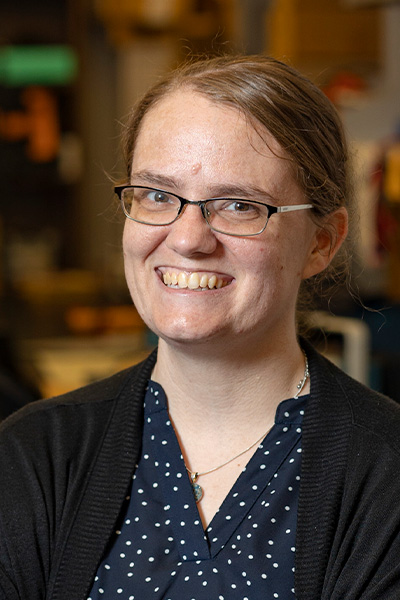
Prof. Catherine (Katie) Schuman
Bio: Catherine (Katie) Schuman is an Assistant Professor in the Department of Electrical Engineering and Computer Science at the University of Tennessee (UT). She received her Ph.D. in Computer Science from UT in 2015, where she completed her dissertation on the use of evolutionary algorithms to train spiking neural networks for neuromorphic systems. Katie previously served as a research scientist at Oak Ridge National Laboratory, where her research focused on algorithms and applications of neuromorphic systems. Katie co-leads the TENNLab Neuromorphic Computing Research Group at UT. She has over 100 publications as well as seven patents in the field of neuromorphic computing. Katie serves at the Community Outreach Director for The Neuromorphic Commons (THOR).
Title: The Neuromorphic Commons (THOR): Developing a Neuromorphic Hub for USA Ecosystem for Research, Infrastructure and Collaboration
Abstract: This project aims to develop, deploy, and manage a large-scale community research infrastructure, The Neuromorphic Commons – THOR, which will provide access to open and heterogeneous neuromorphic computing hardware systems. Our vision is to foster interdisciplinary collaborative research on the neuronal foundations of biological intelligence, covering the full spectrum from perception, decision making, to continual learning in the physical world. Through close-knit partnerships with industry, we will provide a robust and practical neuromorphic resource for the community, enabling a broad range of applications. In this presentation, we will provide an update on the state of THOR to the broader community.
 ACM International Conference on Neuromorphic Systems, ICONS 2025